
Morjim Beach is known for its golden sand, beautiful Arabian Sea sunsets and relaxed North Goa atmosphere. But there is another reason this beach is special: Olive Ridley turtles come to Morjim Beach to nest.
These remarkable marine turtles have made parts of Goa’s coastline an important nesting habitat. Morjim is officially recognised as one of Goa’s turtle nesting beaches, alongside Galgibaga and Agonda. The Government of Goa describes Morjim Beach as a place where Olive Ridley turtles come to nest, with volunteers helping protect nests and hatchlings.
For visitors, seeing a turtle nest or hatchling can be an unforgettable experience. But the most important part of visiting a turtle nesting beach is understanding that the beach belongs to wildlife too.
This guide explains everything travellers should know about Olive Ridley turtles at Morjim Beach, including nesting, conservation, responsible tourism and how visitors can help protect these endangered marine animals.
What Are Olive Ridley Turtles?
The Olive Ridley turtle (Lepidochelys olivacea) is one of the world’s smaller species of sea turtles. It gets its name from its characteristic olive-green or olive-grey shell.
Olive Ridley turtles spend most of their lives in the ocean but return to sandy beaches to lay their eggs.
The nesting process is fascinating. A female turtle usually comes ashore after dark, finds a suitable area of sand and digs a nest using her rear flippers. She lays her eggs inside the chamber before carefully covering the nest with sand.
Once the nesting process is complete, she returns to the sea.
The eggs then remain buried in the sand until the hatchlings emerge and make their way towards the ocean.
This is why keeping the beach dark, quiet and undisturbed is so important during the nesting and hatching period.
Why Is Morjim Beach Important for Olive Ridley Turtles?
Morjim is one of Goa’s recognised Olive Ridley turtle nesting beaches.
The Goa Forest Department identifies Morjim, Galgibaga and Agonda as important turtle nesting sites. The department describes turtle nesting in Goa as an annual natural phenomenon and highlights the conservation importance of these beaches.
Morjim is particularly interesting because its natural environment includes more than just the sandy beach. The wider area includes the Chapora River estuary, sand dunes, mangroves, mudflats and other coastal habitats.
Government ecological documentation identifies the combination of turtle nesting beaches, sand dunes, mangroves, mudflats and estuarine habitats around Morjim as important coastal biodiversity features.
This makes Morjim more than a beach destination. It is also an important coastal ecosystem.
When Do Olive Ridley Turtles Nest at Morjim Beach?
Turtle nesting is seasonal and naturally varies from year to year.
If you are travelling to Morjim specifically to learn about or observe turtle nesting, it is best to check with local Forest Department officials or authorised conservation personnel about current nesting activity rather than assuming that turtles will be present on a particular night.
Nesting beaches can also have temporary protection measures during the season.
The Goa Forest Department has historically organised awareness programmes at Morjim to educate residents, visitors and tourism stakeholders about the importance of protecting Olive Ridley nesting habitat.
An important point for visitors
Do not treat turtle nesting as a guaranteed tourist attraction.
The turtles should always come first.
A responsible visit means accepting that you may not see a turtle, nest or hatchling — and that is perfectly fine.
The goal is to protect the natural nesting process rather than create a wildlife spectacle.
How Does an Olive Ridley Turtle Nest?
A female turtle arriving on the beach follows a fascinating natural sequence.
1. The turtle approaches the beach
The female emerges from the sea, usually when conditions are suitable and human activity is lower.
2. She searches for a nesting location
She moves above the high-tide area and searches for a suitable section of sand.
3. She digs a nest
Using her rear flippers, she creates a chamber in the sand.
4. She lays her eggs
The eggs are deposited into the nest.
5. She covers the nest
The turtle carefully fills the nest with sand, helping camouflage it.
6. She returns to the sea
Once the nesting process is complete, the female returns to the Arabian Sea.
The turtle may spend only a relatively short time on the beach, but the nest can remain there for much longer.
This is why visitors should never walk over areas that have been marked or protected for nesting.
Why Are Turtle Nests Protected?
A turtle nest may look like nothing more than a patch of sand.
But beneath that sand can be a large number of developing eggs.
A nest can be damaged accidentally by people walking over it, beach furniture, vehicles, animals, artificial lighting and other forms of disturbance.
Government conservation guidance for Goa stresses the importance of keeping turtle nesting beaches undisturbed. Conservation recommendations have included reducing artificial lighting, preventing litter and maintaining beaches in a pristine condition during nesting periods.
This is one reason visitors should always respect fencing, signs and designated protected areas.
What Happens When the Hatchlings Emerge?
After developing inside the nest, baby turtles eventually emerge from the sand.
The hatchlings instinctively move towards the sea.
For them, this short journey can be one of the most dangerous moments of their lives.
They may encounter obstacles, artificial lights, people, dogs or other threats before reaching the water.
This is why beach lighting matters.
Natural light from the horizon and sea helps hatchlings orient themselves towards the ocean. Bright artificial lights can interfere with this natural behaviour.
For this reason, visitors should avoid shining torches or mobile-phone lights towards nesting turtles or hatchlings.
How Can Tourists Help Olive Ridley Turtles at Morjim Beach?
You don’t need to be a wildlife expert to help.
Small actions can make a significant difference.
1. Keep the beach clean
Never leave plastic bottles, food packaging, fishing line, bags or other waste on the beach.
Marine litter can harm turtles and other wildlife.
Take your waste with you or dispose of it responsibly.
2. Don’t touch turtles
If you see a turtle, give it plenty of space.
Never touch, chase, photograph from extremely close range or attempt to guide a turtle towards the sea.
Wild animals should be allowed to behave naturally.
3. Avoid bright lights
Do not use powerful torches, flash photography or phone lights around nesting turtles and hatchlings.
Artificial light can disturb nesting behaviour and disorient hatchlings.
4. Follow signs and fencing
If an area is fenced or marked as protected, do not enter it.
The fencing exists for a reason.
A seemingly harmless shortcut across a protected section of beach can damage a nest.
5. Keep dogs away from nesting areas
Dogs can disturb nesting turtles and hatchlings.
During turtle nesting periods, visitors should follow local restrictions regarding pets and protected areas.
6. Don’t drive vehicles on nesting beaches
Vehicles can destroy nests and disturb wildlife.
If access restrictions are in place, respect them.
7. Avoid loud activities near nesting areas
Music, parties and loud gatherings can disturb wildlife.
During the nesting season, quiet and responsible beach behaviour is especially important.
8. Never take turtle eggs or hatchlings
Turtle eggs and hatchlings are protected wildlife.
If you encounter a nest or hatchling, do not interfere.
Instead, alert authorised conservation personnel if assistance is needed.
Can You Watch Olive Ridley Turtles at Morjim Beach?
Yes, Morjim is a recognised turtle nesting beach, but wildlife observation should always be responsible and non-invasive.
The best approach is not to search aggressively for turtles.
Instead:
- Follow local Forest Department instructions.
- Stay outside protected areas.
- Keep your distance.
- Keep noise low.
- Avoid artificial lights.
- Never touch turtles or hatchlings.
- Do not disturb marked nests.
- Follow temporary beach restrictions.
Remember that a successful turtle conservation experience may simply mean seeing a protected nesting area and knowing that the turtles are safe.
Turtle Conservation Is a Community Effort
Turtle conservation at Morjim is not the responsibility of one organisation alone.
It involves government agencies, local communities, volunteers, tourism businesses, fishermen, residents and visitors.
The Goa Forest Department has conducted turtle conservation awareness activities at Morjim, including workshops designed to educate local people and students about Olive Ridley nesting habitat.
This community approach is particularly important in places such as Morjim, where tourism and coastal wildlife exist side by side.
Hotels, restaurants and other tourism businesses can contribute by educating guests, reducing waste, controlling unnecessary lighting and encouraging responsible beach behaviour.
Morjim Beach: More Than a Tourist Destination
Morjim’s appeal comes from its combination of natural beauty and local character.
The beach is connected to a larger coastal landscape that includes the Chapora River estuary and other habitats supporting biodiversity.
The Goa Forest Department has identified the area’s sand dunes, turtle nesting beaches, mangroves, mudflats and headlands as ecologically significant features.
For travellers, this creates an opportunity to experience a different side of Goa.
Instead of simply asking, “What can I do at Morjim Beach?”, visitors can ask:
“How can I enjoy Morjim Beach while helping protect it?”
That small change in perspective makes tourism more sustainable.
Staying Near Morjim Beach
If you want to explore Morjim and experience the beach at a relaxed pace, staying nearby makes it easier to enjoy the area without spending your holiday constantly travelling.
Morjim Sunset Hotel is located in Morjim, North Goa, close to Morjim Beach and the area’s restaurants, cafés and coastal attractions.
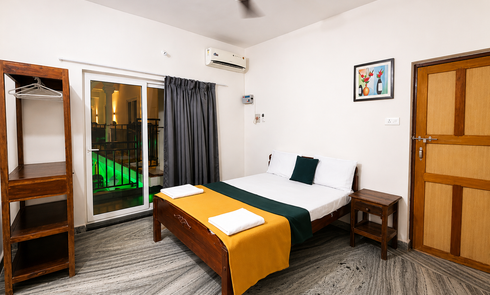
The hotel offers a mix of Deluxe AC Rooms, Premium AC Rooms with balconies, pool-view accommodation and apartments with private kitchens, making it suitable for couples, families and longer stays.
For guests interested in the natural side of Morjim, the location also makes it convenient to explore the beach, Chapora River area and surrounding North Goa attractions.
The hotel team can also help guests understand responsible beach etiquette and encourage visitors to respect turtle nesting areas.
A Responsible Traveller’s Turtle Checklist
Before heading to Morjim Beach during turtle nesting season, remember this simple checklist:
DO
✓ Follow Forest Department instructions
✓ Respect turtle nesting zones
✓ Keep the beach clean
✓ Keep noise low
✓ Use minimal lighting
✓ Stay outside protected areas
✓ Keep pets away from nesting areas
✓ Report injured wildlife to authorised authorities
DON’T
✗ Touch turtles
✗ Touch hatchlings
✗ Pick up hatchlings
✗ Walk across protected nests
✗ Use bright lights near turtles
✗ Use flash photography close to nesting turtles
✗ Leave plastic or food waste behind
✗ Drive vehicles through nesting areas
✗ Organise loud activities near nesting sites
What If You Find a Turtle or Hatchling?
The best response is to keep your distance and avoid interfering.
Do not attempt to move the turtle.
Do not pick up a hatchling.
Do not surround it with people for photographs.
If you believe the animal is injured, trapped or in immediate danger, contact the appropriate local wildlife authorities or Forest Department personnel.
The Goa Forest Department provides 24×7 wildlife helpline numbers, including North Goa: 0832-2228772.
Why Turtle Conservation Matters to Morjim
The story of Olive Ridley turtles is closely connected to the identity of Morjim.
A beach that supports nesting turtles needs to remain suitable for wildlife while also welcoming visitors.
That balance is possible.
Responsible tourism can help local businesses and communities benefit from visitors while protecting the natural environment that makes Morjim special in the first place.
The Goa Forest Department has recognised the need to protect turtle nesting sites such as Morjim and minimise human interference.
For a destination like Morjim, conservation isn’t simply about protecting turtles.
It is also about protecting the character of the beach for future generations.
Frequently Asked Questions About Olive Ridley Turtles in Morjim
Are there Olive Ridley turtles at Morjim Beach?
Yes. Morjim is recognised by the Government of Goa as an Olive Ridley turtle nesting beach.
Is Morjim Beach a turtle nesting beach?
Yes. Morjim is one of Goa’s recognised Olive Ridley turtle nesting sites, along with Galgibaga and Agonda.
Can tourists see Olive Ridley turtles in Morjim?
Visitors may encounter nesting turtles or protected nesting areas during the appropriate season, but sightings are not guaranteed. Visitors should never disturb turtles or enter protected nesting zones.
Can I touch a turtle?
No. Never touch or chase a nesting turtle or hatchling.
Can I take photos of Olive Ridley turtles?
Photography should only be done from a safe distance and without flash or bright lights. If local authorities have imposed restrictions, those instructions should always take priority.
Can I walk on Morjim Beach during turtle nesting season?
Beach access may be subject to temporary restrictions or protected zones. Always follow signs, fencing and instructions from the Forest Department.
Where else in Goa can Olive Ridley turtles nest?
Goa’s recognised nesting beaches include Morjim, Agonda and Galgibaga.
Protect the Beach You Came to Enjoy
Morjim Beach is beautiful because of its natural environment.
The sand, sea, dunes, river, wildlife and local community all form part of the destination.
Olive Ridley turtles are an important part of that story.
The next time you walk along Morjim Beach, look beyond the sunset and the waves. Somewhere beneath the sand may be a turtle nest waiting for its next generation.
The best souvenir you can leave behind is nothing but footprints — and the best contribution you can make is to leave the nesting beach undisturbed.
Planning a Stay in Morjim?
Make Morjim your base for exploring North Goa, relaxing by the pool and enjoying the beach at your own pace.
Stay close to Morjim Beach at Morjim Sunset Hotel and discover the natural beauty, food, culture and relaxed coastal lifestyle of Morjim.
[Book your stay at Morjim Sunset Hotel →]
Conservation information and local access conditions can change between seasons. Visitors should always follow the latest instructions issued by the Goa Forest Department and other authorised local authorities.